Industry Knowledge
How Surface Treatment Determines the Real Lifespan of a Lug Wrench
A tire wrench sitting in a spare tire well spends most of its life exposed to moisture, road salt spray, and temperature swings. The base material — typically high-carbon steel — is strong, but untreated steel corrodes fast in those conditions. Surface treatment is what separates a wrench that lasts a season from one that lasts a decade.
The three most common finishes each carry different protective properties:
| Treatment |
How It Works |
Typical Durability |
Best For |
| Blackening (Bluing) |
Converts surface iron into magnetite (Fe₃O₄) |
Moderate — needs supplemental oil coating |
Cost-sensitive OEM kits |
| Electrophoresis (E-coat) |
Electrically deposits a uniform polymer film into every recess |
High — 500+ salt-spray hours in standard tests |
Automotive aftermarket, export products |
| Galvanizing (Zinc Plating) |
Sacrificial zinc layer corrodes before base steel does |
High — especially effective in coastal/salt environments |
Heavy-duty and commercial-grade tools |
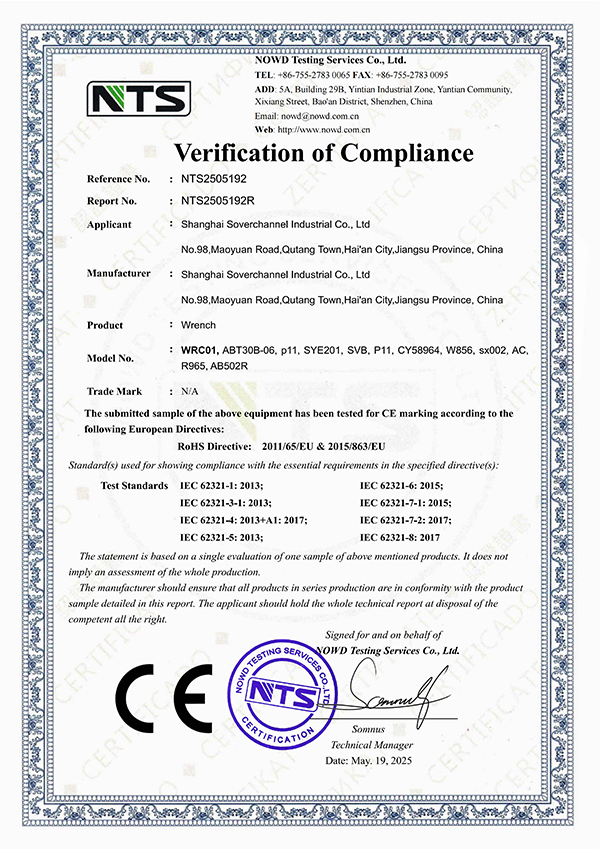
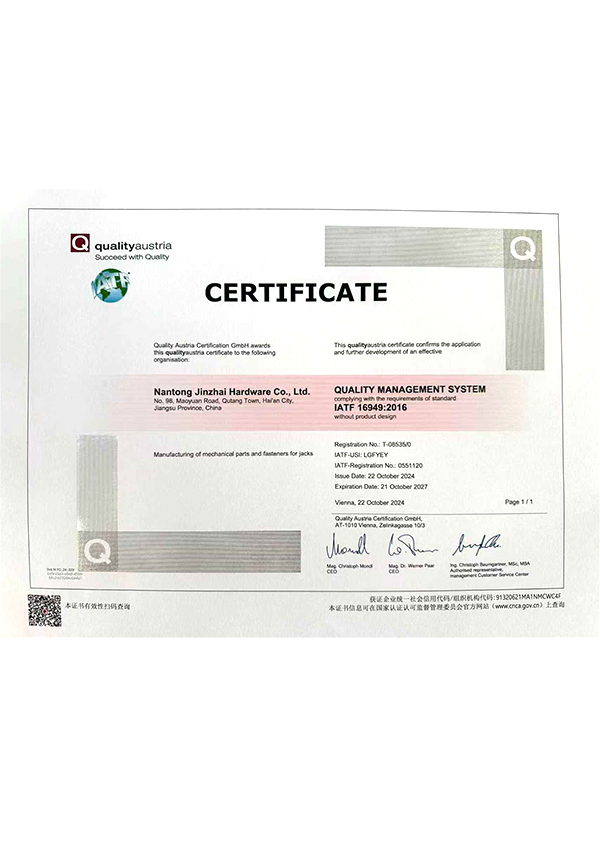
Electrophoresis coatings are increasingly preferred for export lug wrenches because the electrodeposition process reaches threaded inner sockets and blind corners that spray painting cannot. For buyers sourcing OEM or private-label tools at volume, specifying the coating type upfront — not just requesting "rust-resistant" — is the single most impactful quality decision. Shanghai Soverchannel Industrial Co., Ltd. applies a full-process inspection system across all surface treatment stages, verifying coating thickness and adhesion before parts ship from its Nantong Jinzhai Hardware manufacturing plant.
Matching Socket Size to Vehicle Class: A Practical Procurement Reference
Specifying the wrong socket size on a tire wrench is more than an inconvenience — a socket that's even 1mm too loose generates rounding forces on lug nuts under torque. The relationship between socket size and vehicle class is well-established, but procurement teams often compress it into vague categories. The table below gives actionable size ranges by vehicle type.
| Socket Size |
Primary Vehicle Class |
Common Examples |
Notes |
| 17 mm |
Compact / subcompact passenger cars |
Hatchbacks, sedans, small family cars |
Most common in European and Asian passenger platforms |
| 19 mm |
Mid-size passenger cars |
Saloons, executive sedans |
Often bundled with 17 mm in dual-socket Phillips-head designs |
| 21 mm |
SUVs and MPVs |
Mid-size SUVs, minivans |
Dominant size in Chinese domestic SUV market |
| 22 mm |
Full-size SUVs and large MPVs |
7-seat SUVs, large people carriers |
Growing demand as full-size SUV sales increase globally |
| 24 mm+ |
Vans, light trucks, commercial vehicles |
Cargo vans, pickup trucks, light commercial fleets |
Requires higher torque leverage; telescopic handle designs preferred |
Fleet operators managing mixed vehicle types — say, a logistics company running both passenger sedans and light delivery vans — benefit from stocking Phillips-head (cross-pattern) lug wrenches that carry two socket sizes in a single tool. This reduces SKU count without sacrificing coverage.
L-Shaped vs. Phillips Head vs. Telescopic: Choosing the Right Design for the Application
The three main lug wrench configurations are not interchangeable by preference — each has a structural logic tied to the use case.
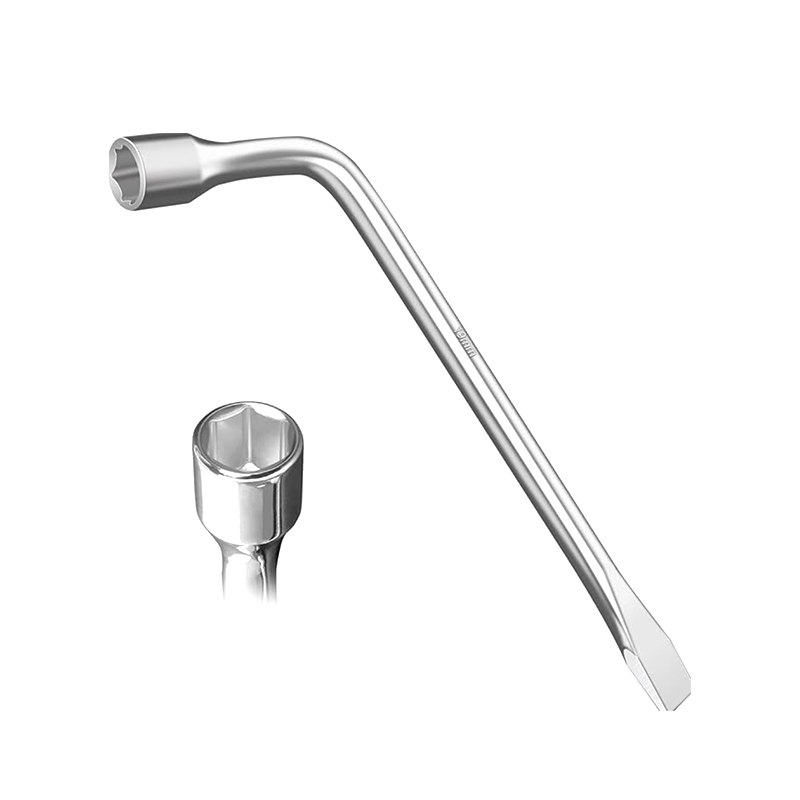
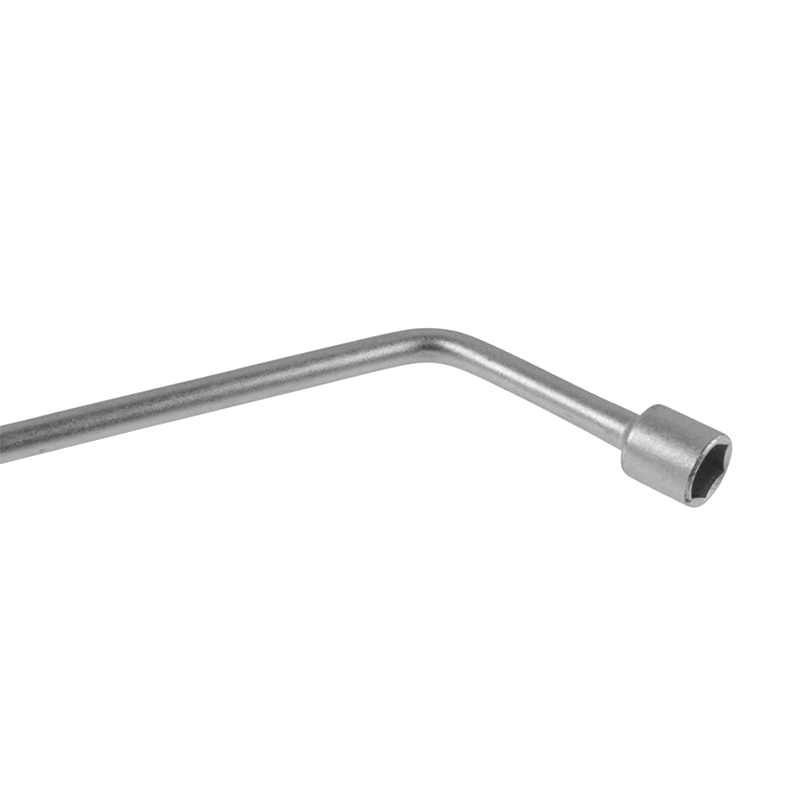
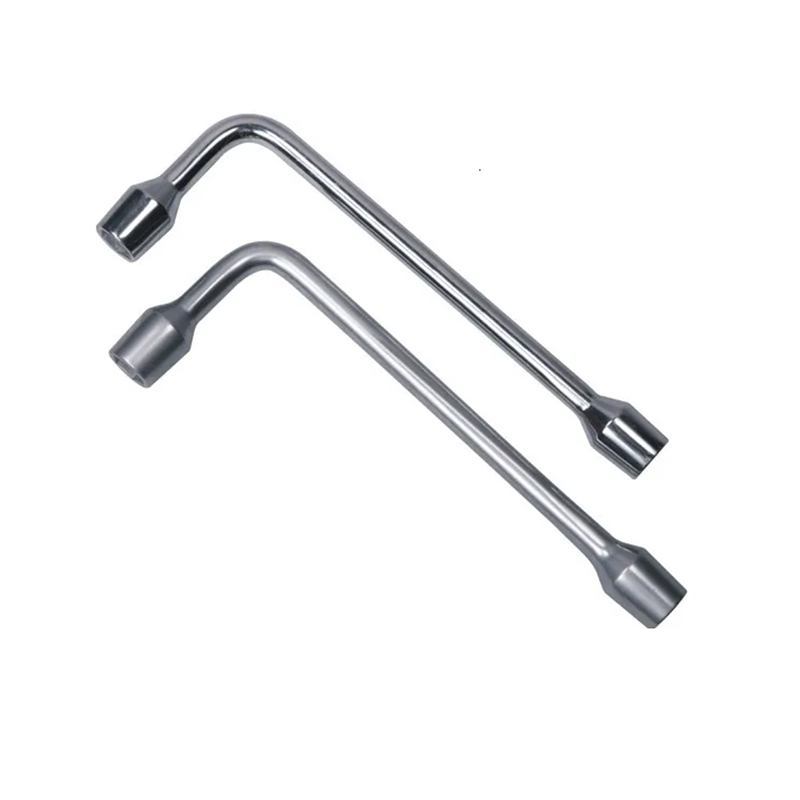
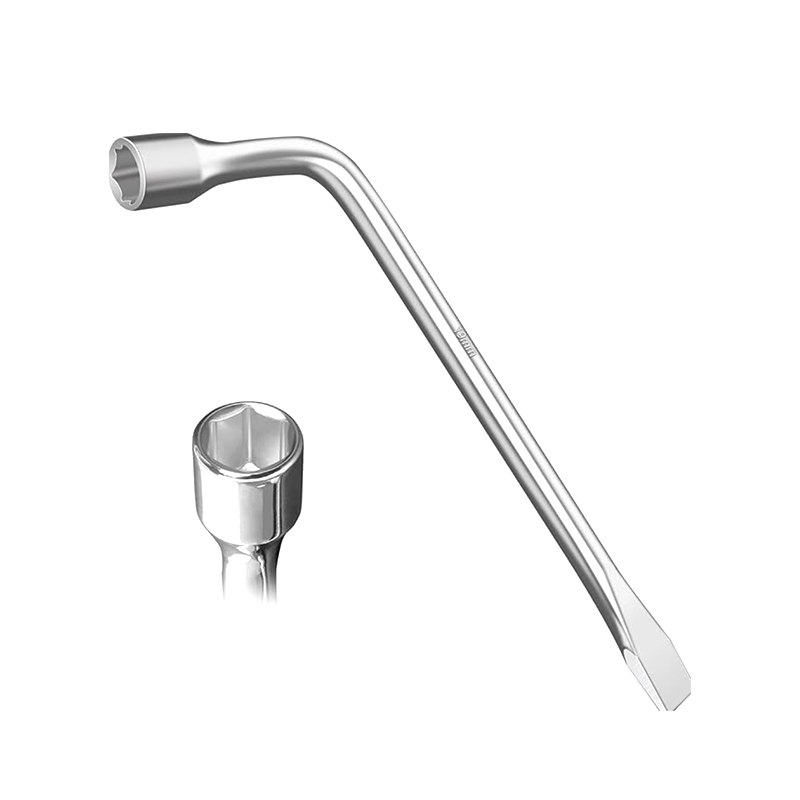
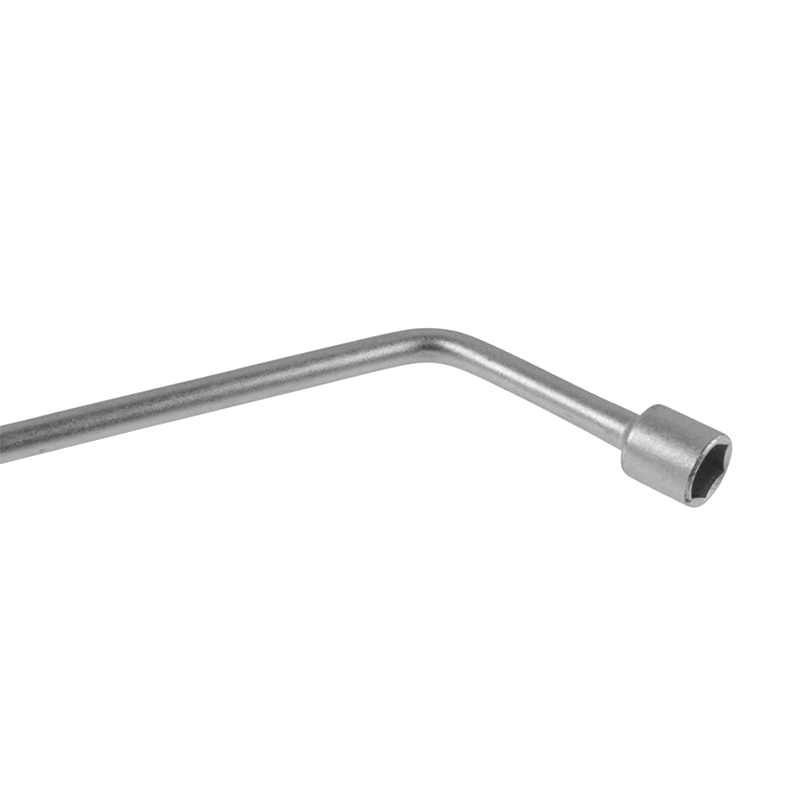
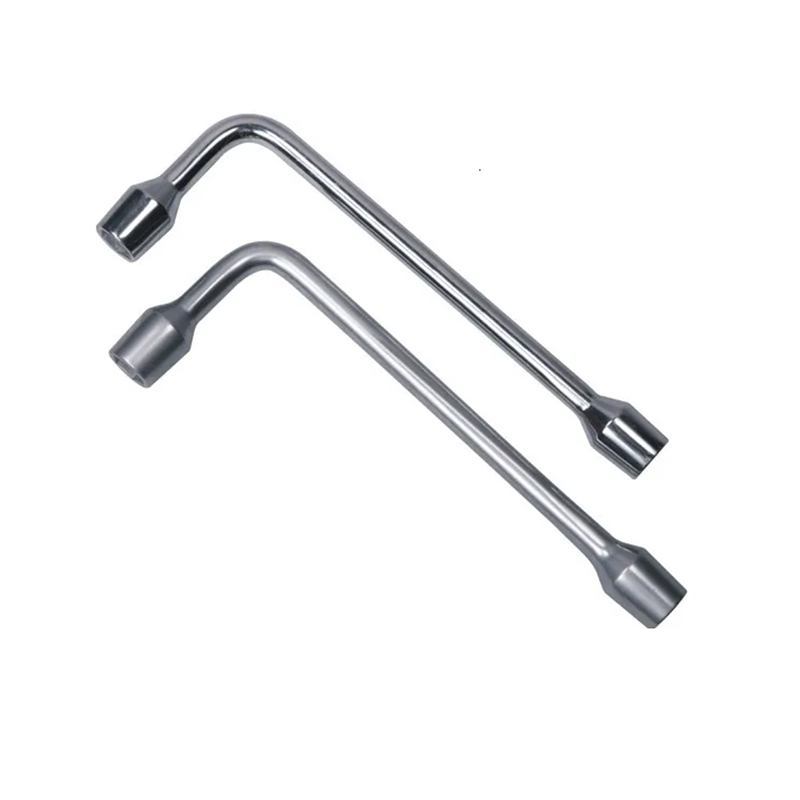
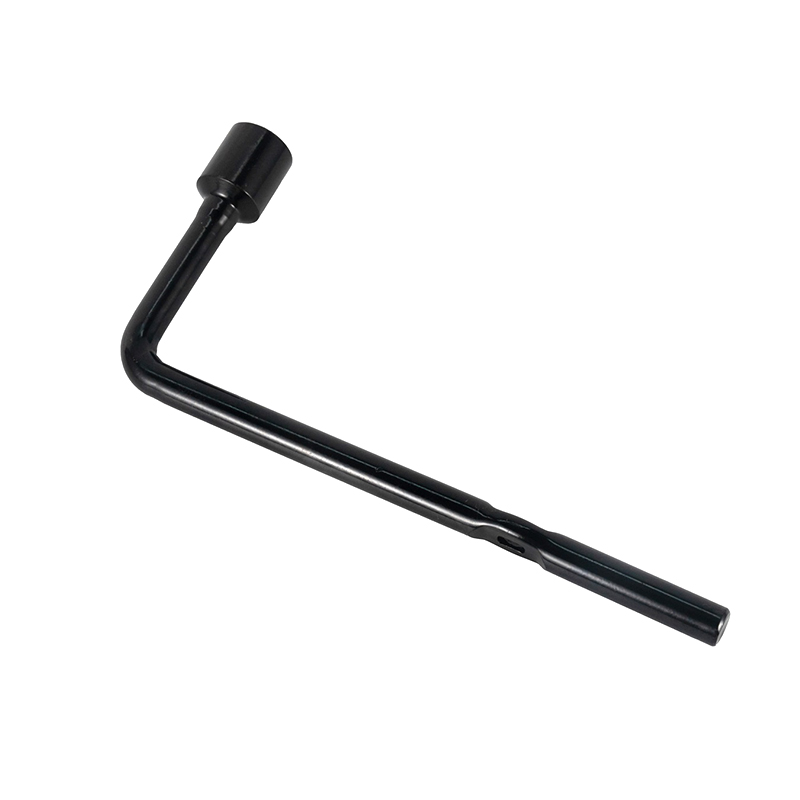
L-Shaped (Single-Socket)
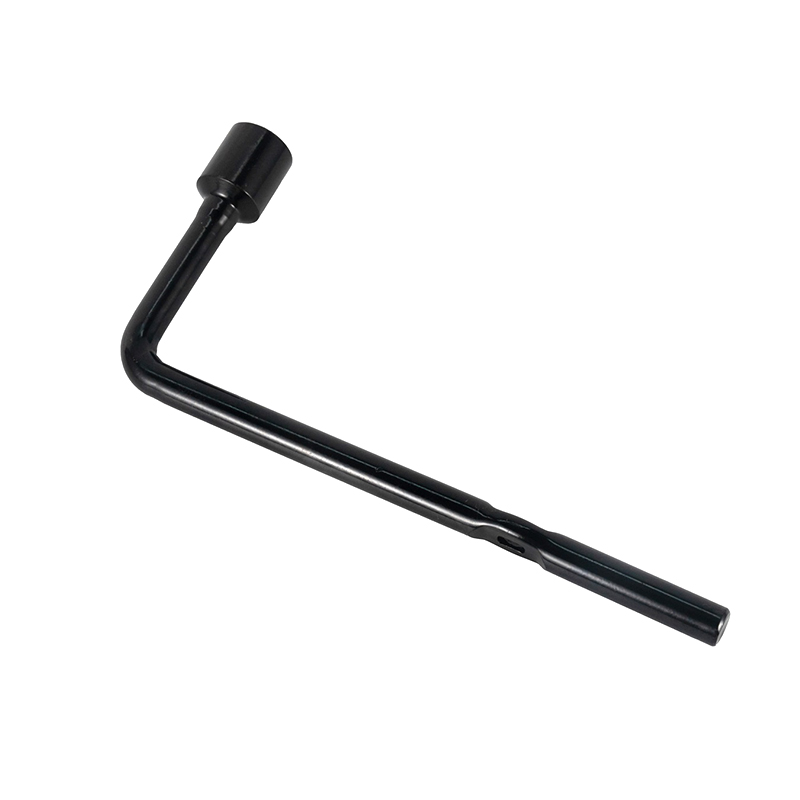
The simplest and lightest configuration. One end has a socket, the other is a plain bar handle. The geometry allows high downward force when breaking loose a stubborn nut. Space efficiency is excellent — it stows flat in a spare wheel well with no moving parts to fail. The trade-off is limited leverage compared to longer designs; it works best on smaller passenger car nuts torqued to OEM specification (typically 80–120 Nm).
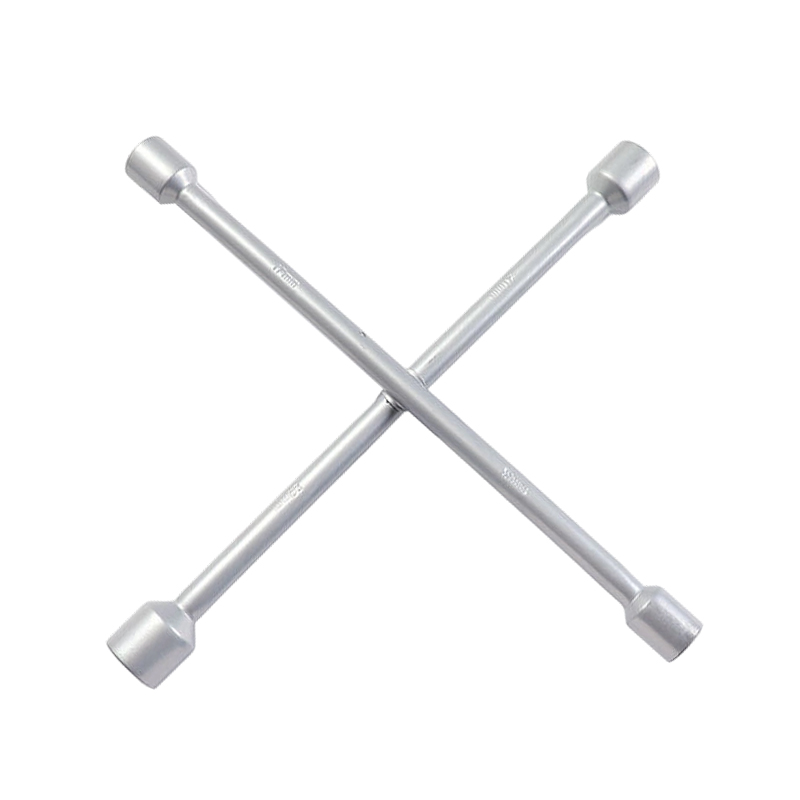
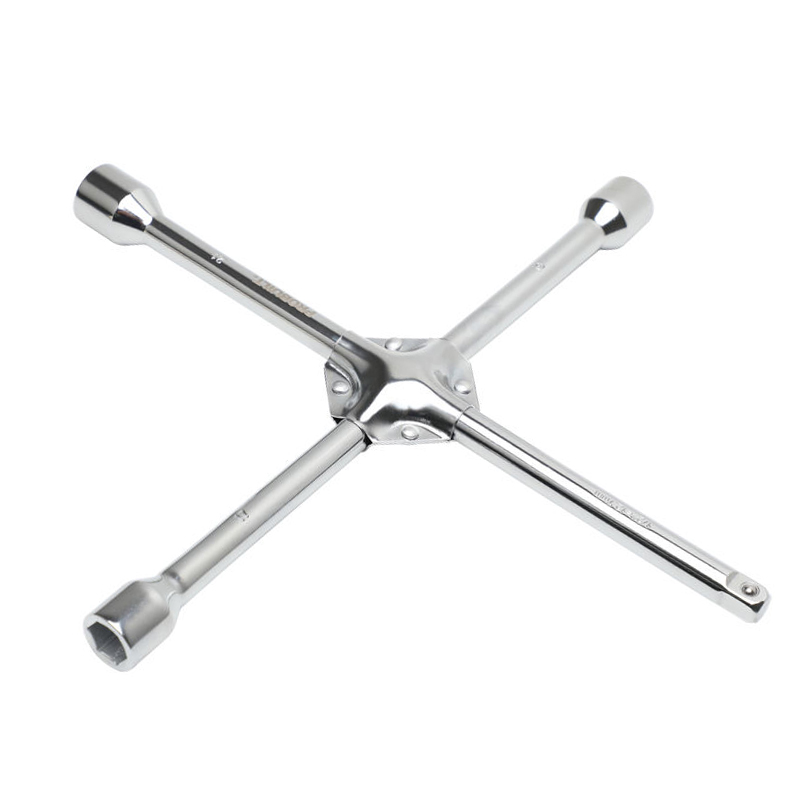
Phillips Head (Cross / X-Pattern)
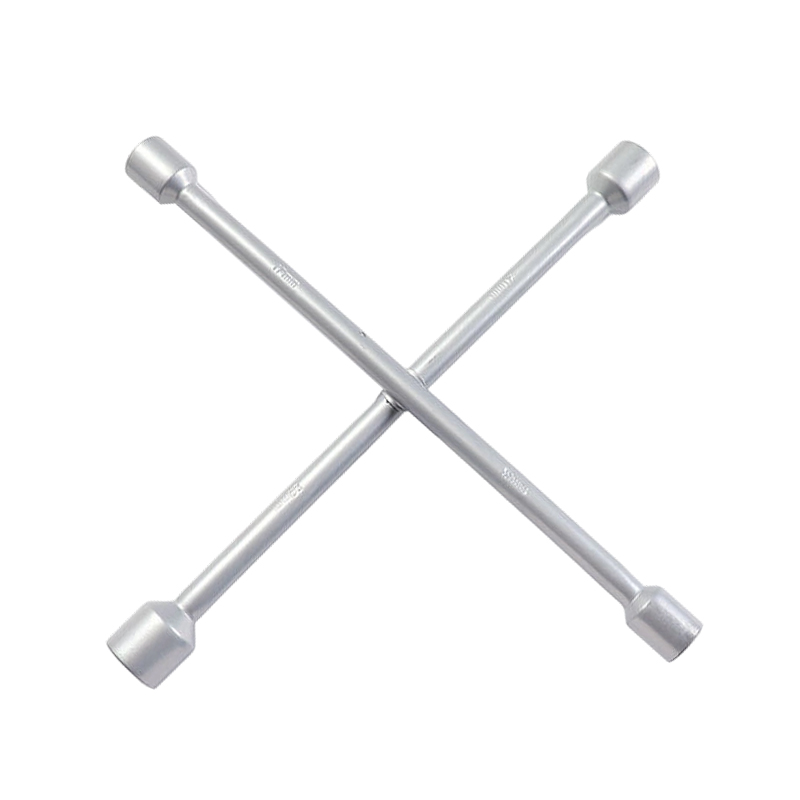
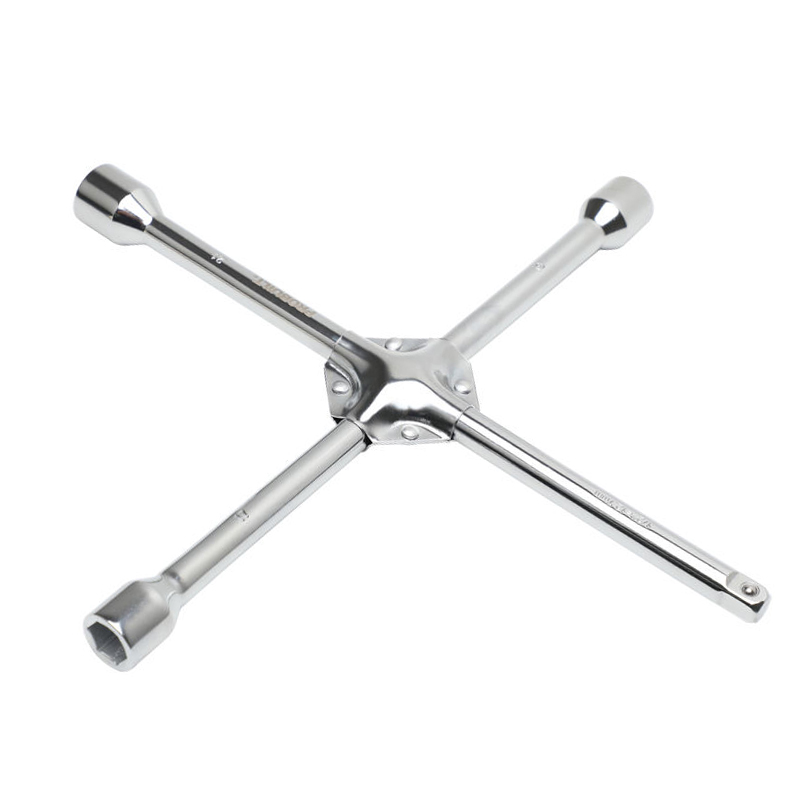
Four arms in a cross pattern, typically with two different socket sizes opposite each other and plain ends on the other two arms. The cross geometry doubles as a "T-bar" when held at the center, and the longer effective lever arm significantly reduces the effort needed versus an L-shape — particularly useful when changing tires roadside without pneumatic tools. The additional socket size also makes it a dual-vehicle tool, which is why it's the most common form bundled with passenger cars and SUVs globally.
Telescopic (Extendable)
A sliding inner tube extends the handle length on demand, directly increasing the torque that can be applied (torque = force × lever arm length). A wrench extending from 350 mm to 600 mm can more than double the effective torque output for the same applied force. This design targets vans, light trucks, and commercial vehicles where lug nut torque specifications reach 180–250 Nm — well beyond what a fixed-length handle can safely deliver without a breaker bar. The collapsing mechanism adds cost and a mechanical joint that requires quality control attention; consistent inner-tube fit tolerance is critical to prevent wobble under load.
High-Carbon Steel Grades and What They Mean for Fatigue Life in Tire Wrenches
Most tire wrenches on the market are described simply as "high-carbon steel." That label covers a wide range of actual material specs, and the difference matters when a wrench is used repeatedly under high torque — as it would be in a fleet maintenance or workshop context.
High-carbon steel for hand tools typically falls in the 0.6%–1.0% carbon range. Higher carbon content increases hardness and wear resistance but reduces ductility. For a lug wrench, the goal is not maximum hardness (which would make the tool brittle under shock loading when breaking a seized nut) but rather an optimized combination of yield strength and toughness. A wrench that deforms slightly under extreme overload is safer than one that fractures.
Key material indicators to verify when sourcing:
- Tensile strength: Quality lug wrenches should meet or exceed 600 MPa, with premium designs reaching 800 MPa+.
- Heat treatment spec: Quench-and-temper treatment standardizes grain structure across the bar. Ask suppliers for the tempering temperature range used — 400–600°C is typical for toughness-focused tool steel.
- Hardness (HRC): Socket walls should target HRC 38–45 to resist deformation without cracking.
- Material certificate: Reputable manufacturers provide mill certificates that trace the steel batch, enabling traceability if a quality issue arises at the assembly plant.
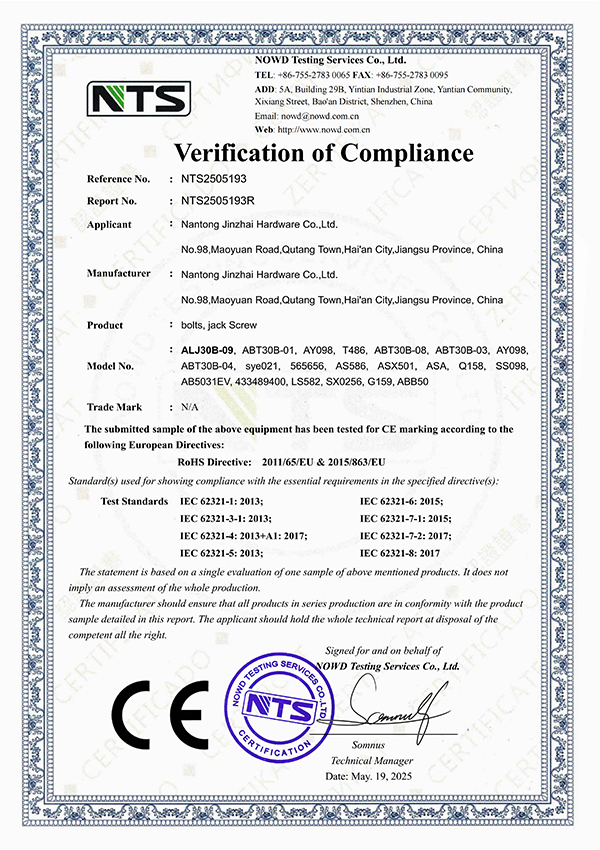
Shanghai Soverchannel Industrial Co., Ltd., through its manufacturing subsidiary Nantong Jinzhai Hardware Co., Ltd., maintains full-process inspection from raw material intake through finished goods, making material certification a standard deliverable for OEM customers — not an optional add-on.
OEM vs. Aftermarket Tire Wrench Sourcing: What Changes in Specification Requirements
A lug wrench supplied as OEM equipment inside a new vehicle is held to a different specification profile than an aftermarket tool sold independently. Understanding this distinction helps procurement teams set accurate quality targets rather than adopting generic "tool-grade" benchmarks.
OEM Requirements
- Dimensional tolerance tied directly to the vehicle's specific lug nut specification — zero fit ambiguity allowed
- Packaging and stowage compatibility with the spare wheel compartment dimensions
- Brand-neutral or brand-labeled surface finish per vehicle manufacturer's visual standards
- Compliance documentation (PPAP, IMDS, ROHS depending on market) often mandatory
- Long-term supply continuity across multi-year production runs
Aftermarket Requirements
- Broader socket size compatibility (dual-socket designs covering multiple vehicle classes sell wider)
- Retail packaging and visual appeal — surface finish quality is directly visible to the end buyer
- Price sensitivity higher; buyers compare specs across multiple sources before selecting
- Higher tolerance for non-standard or custom-shaped designs (ergonomic grip inserts, color coding)
Suppliers with genuine OEM experience bring a discipline to non-standard part customization that pure aftermarket manufacturers often lack — particularly in dimensional control and documentation. As an OEM/ODM manufacturer with deep roots in the automotive fastener sector, Shanghai Soverchannel Industrial Co., Ltd. is structured to handle both channels: high-volume standardized production for OEM programs and flexible custom development for aftermarket buyers requiring non-standard bolt geometries or unique socket configurations.
Torque Compliance in Roadside Tire Changes: What Mechanics Know That Drivers Don't
Every vehicle manufacturer publishes a lug nut torque specification — typically in the range of 80–140 Nm for passenger cars, rising to 180–250 Nm for vans and light commercial vehicles. In a workshop, a calibrated torque wrench ensures compliance. Roadside, the driver uses a lug wrench by feel.
Under-torquing is the more common failure: nuts that vibrate loose on the highway. But over-torquing with an improperly sized or worn socket can strip threads or warp brake rotors — especially on aluminum wheels where the lug seats are sensitive to uneven clamping forces. A few practical points that professional mechanics apply and that are relevant when specifying lug wrenches for fleet or OEM use:
- Star pattern tightening: Lug nuts should be tightened in a cross (star) sequence, not in a circle. This distributes clamping force evenly across the hub. A lug wrench's handle length implicitly limits torque; oversized handles on compact-car wrenches are a genuine risk.
- Re-torque after 50–100 km: A tire changed roadside should be re-checked at a garage within a short drive. This is standard practice in professional fleet maintenance and should be communicated in vehicle emergency guides.
- Socket wall contact length: Deeper sockets engage more thread length, improving torque transfer and reducing the risk of nut rounding. Minimum socket engagement depth for a M14 nut is typically 20 mm; verify this dimension when comparing suppliers.
- Corrosion on lug nut threads: Surface-treated wrenches are only part of the equation — corroded lug nut threads generate false torque readings (the friction registers as resistance before full clamping is achieved). Fleet maintenance protocols should address thread condition at every tire rotation.
Custom Non-Standard Tire Wrench Configurations: When Standard Designs Fall Short
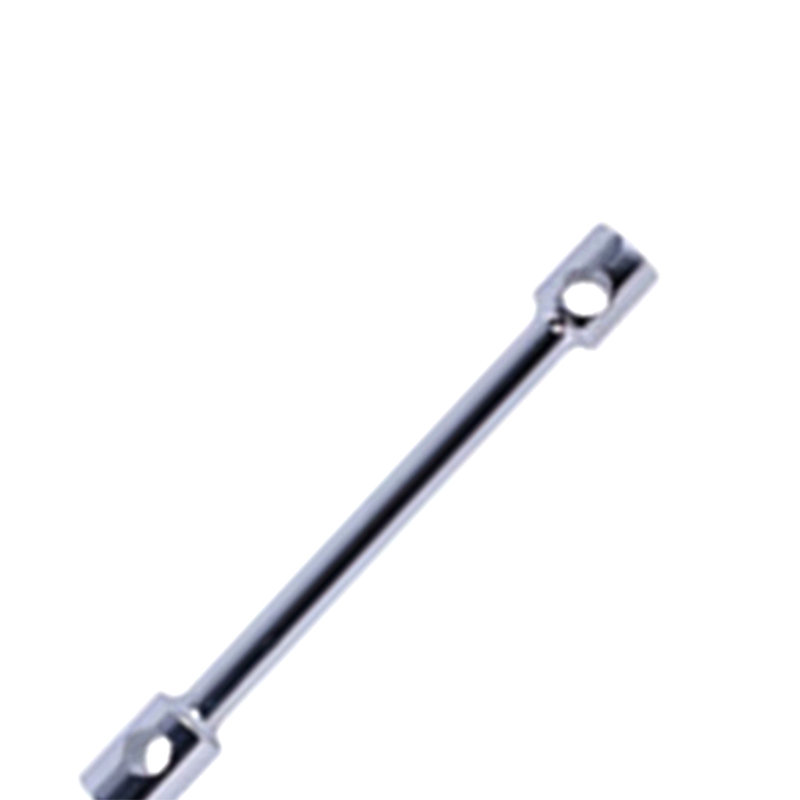
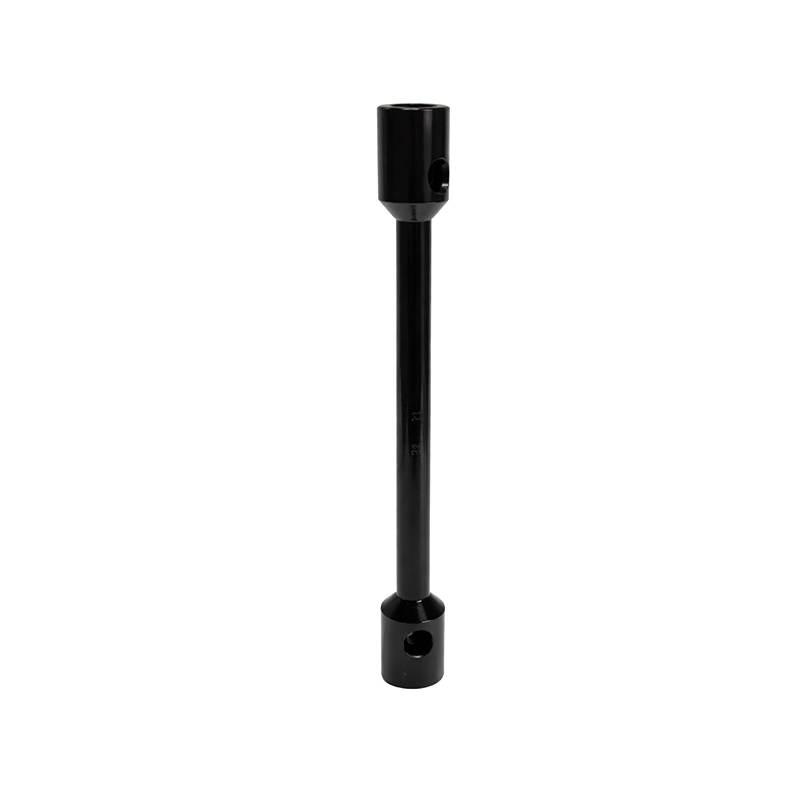
Standard L-shaped, Phillips-head, and telescopic tire wrenches cover the vast majority of passenger and light commercial applications. But specialized vehicle platforms — purpose-built fleet vehicles, off-road equipment, modified platforms with non-OEM wheel setups — sometimes require wrench configurations that standard catalog products cannot address.
Non-standard lug wrench requirements that arise in practice include:
- Dual-metric sockets combining unusual pairings not available off-shelf (e.g., 22 mm + 24 mm for a mixed fleet)
- Extended-handle designs for vehicles where wheel arch clearance requires a longer approach angle to reach the lug nuts
- Integrated bead breaker or valve cap remover features for utility vehicle kits
- Logo engraving or color coding for fleet identification or branded roadside assistance kits
- Metric-to-SAE adapter sockets for markets or fleets transitioning between fastener standards
Executing these customizations reliably requires a manufacturer with both forging/forming capability and precision machining for socket bores — since any non-standard socket must maintain the same dimensional tolerances as a standard one, just applied to a different geometry. Shanghai Soverchannel Industrial Co., Ltd. specifically focuses on non-standard bolt and complex special-shaped component customization, backed by the same advanced production equipment used for high-volume standard parts at Nantong Jinzhai Hardware. That shared infrastructure means custom tire wrench projects benefit from production-level quality control rather than prototype-level improvisation.